5 Best Wildlife Experiences in Australia
There is no wildlife on Earth quite like Australia’s.
This island continent spent millions of years evolving away from the rest of the world, long enough to produce creatures that exist nowhere else on the planet.

Photo Credit: Tourism Tropical North Queensland
But Australia’s wildlife isn’t just about spotting iconic animals. It’s about encounters that stop you in your tracks. The kind of experiences that you’ll be describing to people for the rest of your life.
Here are five of the best wildlife experiences Australia has to offer.
1. Get Up Close with Kangaroos & Koalas in the Wild
Close your eyes and picture Australia. Chances are, you’re seeing a koala dozing in a tree, or a mob of grey kangaroos grazing through open land. It’s the image many people think of when they think “Australia.”
And that’s exactly what you’ll find less than an hour from Australia’s capital city.
Tidbinbilla Nature Reserve, a protected conservation area on the outskirts of Canberra, gives you the real thing. Wild animals, living freely, in their natural habitat.
Inside the reserve, guided tours take you to several different areas where you’ll find kangaroos and wallabies, koalas draped across branches overhead, emus striding through the scrub, platypuses gliding through the creek, and flocks of bright parrots flying overhead.
For many visitors, this is their most favorite experience of their entire trip. It’s a simple joy, seeing kangaroos simply hopping past, completely unbothered by your presence. That’s everyday Australia!

Tidbinbilla Nature Reserve. Photo Credit: VisitCanberra
When to Go and Where
Best time: Year-round, but the cooler months of April through October are ideal. Wildlife is most active in the early morning and late afternoon.
Base yourself in: Canberra. Tidbinbilla is less than an hour from the city, making it an easy half-day or full-day trip.

2. Step Into the Rainforest After Dark
Most visitors come to Cairns for the Great Barrier Reef (and they should!).
But hidden just behind the coast lies one of Australia’s most extraordinary wildlife secrets: the Atherton Tablelands after dark.
This highland region, about 90 minutes from Cairns, sits inside the World Heritage-listed Wet Tropics rainforest. During the day, it’s beautiful. At night, it’s absolutely alive.
The best way to experience it is on a small-group nocturnal wildlife tour led by an expert naturalist guide. As the light fades, the forest transforms. Gliders and flying foxes launch from the canopy. Possums and bandicoots move through the undergrowth. Boyd’s forest dragons cling motionless to tree trunks. And if the guide knows where to look, a platypus emerges from the dark water of a mountain stream.
The platypus alone is worth the trip. This is one of the most elusive animals in Australia, and the Tablelands consistently offers some of the highest sighting rates anywhere in the country. Some guides boast a 90%+ success rate. That’s extraordinary for an animal that most Australians have never seen in the wild!

Platypus in Yungaburra, Atherton Tablelands
When to Go and Where
Best time: Year-round. The dry season (June–October) offers the most comfortable conditions, but nocturnal wildlife is active in all seasons.
Base yourself in: Cairns. Most nocturnal tour operators pick up from Cairns hotels and return you the same night, making this a perfect add-on to any Cairns itinerary.
3. Swim Face-to-Face with Dwarf Minke Whales on the Great Barrier Reef
Every June and July, something extraordinary happens in a remote stretch of the Great Barrier Reef.
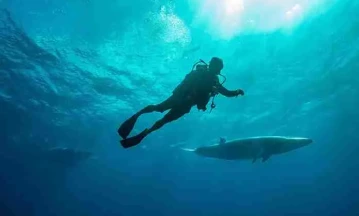
Dwarf minke whales pass through the Ribbon Reefs on their annual winter migration. And for a brief window each year, you can swim with these whales.
What makes this encounter unlike any other is the dynamic: you don’t chase the whales, but rather, they come to you.
You hold a rope trailing behind the boat, float quietly at the surface, and wait. The whales approach on their own terms, sometimes coming within meters, making eye contact, genuinely curious about the strange creatures in wetsuits watching them from above.
The best part is, you don’t need to be a scuba diver. Snorkelers are welcome, making this one of the most accessible bucket-list wildlife encounters in Australia. The experience typically spans several days aboard a premium liveaboard vessel, heading far out to the remote Ribbon Reefs with plenty of time to explore stunning dive sites between whale encounters.
This is a once-a-year experience that happens in one small stretch of ocean, for a few weeks only. There’s nothing quite like it anywhere else in the world.

Photo Credit: Spirit of Freedom Cairns
When to Go and Where
Best time: June and July only. This is a narrow, non-negotiable window, since the whales pass through on their own schedule. Miss it and you’ll have to wait another year.
Base yourself in: Cairns. Liveaboard vessels depart from Cairns Marlin Marina and head north to the Ribbon Reefs, typically 2–3 days out from port.
4. Walk Among Living Dinosaurs in the Daintree
Stand at the edge of a river where a saltwater crocodile, unchanged since the age of the dinosaurs, glides silently along the bank.
Look up, and a southern cassowary stares back at you from the forest floor, a towering, prehistoric bird with electric-blue plumage and a sense that it has been here a very long time. Longer than even our own species.
The Daintree Rainforest has been growing for 180 million years. It is the oldest continuously surviving tropical rainforest on Earth. Within this extraordinary landscape, you’ll find saltwater crocodiles, cassowaries, tree kangaroos high in the canopy, and hundreds of tropical bird species found nowhere else on Earth.
A Daintree River cruise with an expert guide is one of the best ways to experience the region. You’ll spot crocodiles concealed along the mangrove banks and kingfishers perched on overhanging branches.
The cassowary is best spotted in the early morning and late afternoon, particularly around Cape Tribulation and Mission Beach. You’ll want your camera ready and your wits about you. These are big, fast, and entirely wild birds.

Photo Credit: Tourism Tropical North Queensland
When to Go and Where
Best time: The dry season (June–October) offers the most comfortable conditions for rainforest exploration, with lower humidity and clear skies. Cassowary sightings are possible year-round, with slightly higher activity during the wet season when there’s plenty of fruit on the forest floor.
Base yourself in: Cairns or Port Douglas. The Daintree is 30–60 minutes north of Port Douglas, and many operators run full-day tours departing from both towns.
5. Find the Animal Nobody Knows About: Tree Kangaroos
A kangaroo, in a tree, high in the rainforest canopy.
If someone described a tree kangaroo to you without showing you a photo, you’d probably think they were making it up. But in the rainforests of Far North Queensland, two species of tree kangaroos have quietly evolved into some of the most extraordinary animals on the planet.
Australia’s Lumholtz’s and Bennett’s tree kangaroos are the only tree-dwelling macropods in the country.
The Lumholtz’s tree kangaroo is most commonly spotted in the Atherton Tablelands west of Cairns. Known hotspots include Peterson Creek in Yungaburra, Malanda Falls Conservation Park, and the area around the Curtain Fig Tree. The larger Bennett’s tree kangaroo is found north of the Daintree River toward Cape Tribulation.
Your best chances of a sighting are in the early morning or late afternoon, when these animals rest quietly on a branch or move slowly through the canopy. They are classified as Near Threatened, which makes every wild sighting a genuinely rare moment.
Travel with a guide who knows where to look and how to move quietly through the forest. Patience is required, but the payoff is extraordinary!

Lumholtz's Tree Kangaroo
When to Go and Where
Best time: Year-round, though the dry season (June–October) makes forest access easier. Early mornings and late afternoons give you the best sighting windows.
Base yourself in: Cairns. The Atherton Tablelands are around 90 minutes from the city, and most nocturnal wildlife tour operators specifically target tree kangaroo habitat. For Bennett’s tree kangaroos, base yourself in Port Douglas or join a day tour to Cape Tribulation.
Ready to Meet Australia’s Wildlife for Yourself?
Getting the most out of Australian wildlife encounters comes down to being in the right place at the right time, and knowing exactly where to look. That’s where we come in.
Our Australia Destination Specialists have been putting travelers in front of extraordinary wildlife experiences for years. We’ll help you build an itinerary that lines up the seasons, the locations, and the right guides, so you won’t be left just hoping to spot a platypus. You’ll be standing at the creek at dusk with someone who knows it’ll be there.
You focus on the wonder, and we’ll handle the rest.
Request your free consultation today!
You may also like: