

Why Every American Needs to Visit Canberra

Photo Credit: Sal Witchalls / VisitCanberra
Canberra is the thinking traveler’s destination, blending democracy, design, and discovery to rewards those curious enough to seek it out.
What makes Canberra especially compelling for American visitors is how deeply the two nations’ stories are intertwined here. From the American architect who designed its streets to the NASA facility that beamed the Moon landing to the world, and to recognition of the battlefields where Australians and Americans fought side by side, Canberra is a city where the U.S.–Australia relationship is embedded in the streets.
Canberra offers context to visitors to Australia. It is a city of ideas, where every structure has a purpose and every vista tells a story that spans to the other side of the world.
An American Vision: How the Griffins Designed Australia's Capital
In 1912, the newly federated Australian government held an international competition to design a capital city from scratch, a blank-slate opportunity that attracted 137 entries from around the world.
The winners were Walter Burley Griffin and Marion Mahony Griffin, a pair of visionary American architects from Chicago who had both trained under the legendary Frank Lloyd Wright.

Walter Burley Griffin and Marion Mahony Griffin
Rather than imposing a rigid urban grid on the landscape, the Griffins designed Canberra to flow with its natural surroundings. This philosophy echoes through every park, boulevard, and sightline in the city today.


The National Triangle: Canberra's Answer to the National Mall
American visitors will find the Griffin plan’s concept immediately familiar. The National Triangle connects Canberra’s key civic institutions along a series of geometric axes, mirroring the design of Washington, D.C.’s National Mall.
The apices of the triangle are Parliament House, the Defence Headquarters at Russell, and City Hill, each representing a pillar of national life.
A man-made lake, Lake Burley Griffin (named in honor of the architect), sits at the heart of this layout, serving as both a design anchor and a beloved public space.

National Triangle. Photo Credit: Tourism Australia
It is one of the great urban panoramas in the world, and it would not exist without two Americans with a bold idea.
The Power of Place: Democracy and National Identity
Parliament House

Photo Credit: VisitCanberra
The vast collection of Indigenous and contemporary Australian art throughout the building adds another layer, a reminder that democracy here is a living, evolving conversation.
Unlike many seat-of-government buildings, Parliament House actively welcomes visitors, with free guided tours available most days.
Old Parliament House and the Museum of Australian Democracy (MoAD)

Photo Credit: VisitCanberra
For American visitors with an interest in political history, MoAD offers a fascinating parallel to the story told at Washington’s own museums of American history.
The High Court of Australia

High Court of Australia
As Australia’s final court of appeal, it is the equivalent of the U.S. Supreme Court as the guardian of the Constitution and the last word on the law of the land.
Guided tours offer a compelling look at how Australian justice works, and the parallels and contrasts with the American legal tradition make for rich reflection.

One Giant Leap: Canberra's Vital Role in the Moon Landings
Of all the connections between Australia and America, few are more dramatic than the role Canberra played on July 20, 1969.
When Neil Armstrong took humanity’s first steps on the Moon, the world watched, but many don’t realize that the images they saw were beamed to Earth primarily through an Australian satellite dish.
The Honeysuckle Creek Tracking Station, located just outside Canberra, was the facility that received and relayed the first 8.5 minutes of live television footage from the lunar surface. The station’s data was cleaner and stronger than the signals coming from facilities in the United States, which is why NASA chose to broadcast the Australian feed to the world.

Prime Minister John Gorton at Honeysuckle Creek during the Apollo 11 Moon landing. © Commonwealth of Australia (National Archives of Australia)
It is one of the most significant and least-known contributions Australia ever made to an American achievement, and a source of immense national pride.
Today, that legacy lives on at the Canberra Deep Space Communication Complex (CDSCC), a working NASA facility located in the hills southwest of Canberra. Run jointly by NASA and the CSIRO (Australia’s national science agency), CDSCC remains a critical node in NASA’s Deep Space Network, tracking spacecraft on missions to Mars, Jupiter, and beyond.
The visitor center tells the full story of Australia’s space partnership with the United States in an accessible and genuinely thrilling way. It is one of the most unique attractions in Australia, and entirely free to visit.
Mount Stromlo Observatory
The site has a poignant history too, having been largely destroyed by the catastrophic 2003 bushfires and subsequently rebuilt. It is a story of resilience that resonates deeply with the Australian spirit.
The Bush Capital: Where Wilderness Meets the City

Tidbinbilla Nature Reserve. Photo Credit: VisitCanberra
The Australian National Botanic Gardens and the National Arboretum Canberra offer a complementary experience, as living museums of native flora that showcases the extraordinary biodiversity of the Australian continent.
For travelers drawn to nature and the outdoors, the Canberra region offers delight, unexpected by those who equate capital cities with concrete and governance.
Ancient Roots: The Ngunnawal and Ngambri People
The National Gallery of Australia further honors this heritage, housing one of the world’s great collections of Indigenous art, and a must-visit for anyone seeking to understand the full depth of the Australian story.
Shared Sacrifice: The U.S.–Australia Alliance Through Two World Wars and Beyond
The two nations have stood together in virtually every major conflict of the 20th and 21st centuries, and the capital tells that story with honesty, reverence, and gratitude.
The Australian War Memorial: The Emotional Heart of the Nation

Photo Credit: Rohan Thomson / Pew Pew Studio
The War Memorial tells this story with extraordinary care, and the annual ANZAC Day commemorations on April 25th draw visitors from around the world.
In the Second World War, the U.S.–Australia alliance became one of the defining partnerships of the Pacific theater. After the fall of Singapore in 1942 — the greatest military disaster in British history — Australia found itself facing the very real prospect of Japanese invasion. It was the United States that answered the call.

Photo Credit: VisitCanberra
General Douglas MacArthur arrived in Australia in March 1942, making Melbourne and then Brisbane his command headquarters as Allied forces mounted their response in the Pacific. Australian and American troops fought together across New Guinea, the Solomon Islands, and the Philippines in campaigns of extraordinary ferocity.
That shared story is now told on a far grander scale. The Australian War Memorial recently completed a major expansion of its galleries, giving American visitors even more reason to make the trip.
Anzac Atrium, the light-filled space connecting the heritage building to the new galleries, is anchored by a sweeping wall of Wondabyne sandstone quarried from the same rockface as the original Memorial. It displays four major pieces of military technology, including an RF-111 flown over East Timor and the guided missile destroyer HMAS Brisbane, which served in both Vietnam and the Gulf War.
Anzac Hall picks up the story of Australia’s more recent conflicts across three expansive levels, from the Gulf War and Iraq to peacekeeping missions that have involved more than 45,000 Australian personnel since 1947. A dedicated Bomber Command gallery honors the Royal Australian Air Force crews of the Second World War, centered on the restored Lancaster bomber known as G for George.

Royal Aircraft Factory SE5a scout/fighter aircraft and Mural of Australian Military Aircraft
The War Memorial’s galleries on the Pacific War honor both nations’ sacrifices in this defining chapter of their shared history.
The alliance forged in the Pacific has endured ever since. Australian and American forces served together in Korea, Vietnam, the Gulf War, Afghanistan, and Iraq.
The ANZUS Treaty, signed in 1951, formalized the defense alliance between Australia, New Zealand, and the United States. This partnership remains one of the cornerstones of security in the Indo-Pacific region.
At the War Memorial, this entire arc of shared service is documented with remarkable depth and sensitivity.
The Last Post Ceremony: A Daily Tribute

Photo Credit: Marcus Fillinger
It’s an intimate, human-scale act of remembrance that puts a face and a life to the concept of sacrifice. For any visitor, regardless of nationality, it’s an experience that stays with you long after you leave.
The American Memorial Garden
It was established to honor the more than 250,000 American service personnel who were stationed in Australia during World War II and to acknowledge the role the United States played in defending the country during its most vulnerable hour.
The garden serves is a quiet reminder of the bond between the two nations sealed in the battlefield, and that Australians have not forgotten.
The U.S. Embassy Memorial Garden, Canberra
The embassy itself, situated in the heart of the national capital, is a reminder of how central the U.S.–Australia relationship remains to both nations’ foreign policy and strategic outlook.
Plan Your Journey to Canberra
Whether you’re standing on the roof of Parliament House, watching the night sky from Mount Stromlo, encountering a kangaroo at Tidbinbilla, or being moved to silence by the Last Post Ceremony, Canberra offers experiences that are one of a kind.
For travelers who seek authentic encounters with history, culture, nature, and ideas, Canberra is an absolute must on your itinerary.
Ready to experience the Canberra that most visitors miss?
You may also like:


Discover the perfect 3-day Canberra itinerary that covers all the must-see attractions and hidden gems in Australia's capital city.
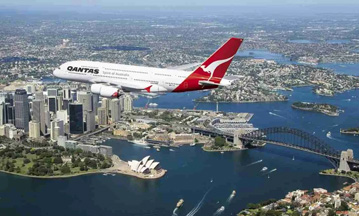
Fly to Australia from the US with ease. Discover what makes the journey worth it and get tips for a seamless travel experience.
